Harm Reduction TextBot
Make referrals, distribute alerts, and engage clients over text message.

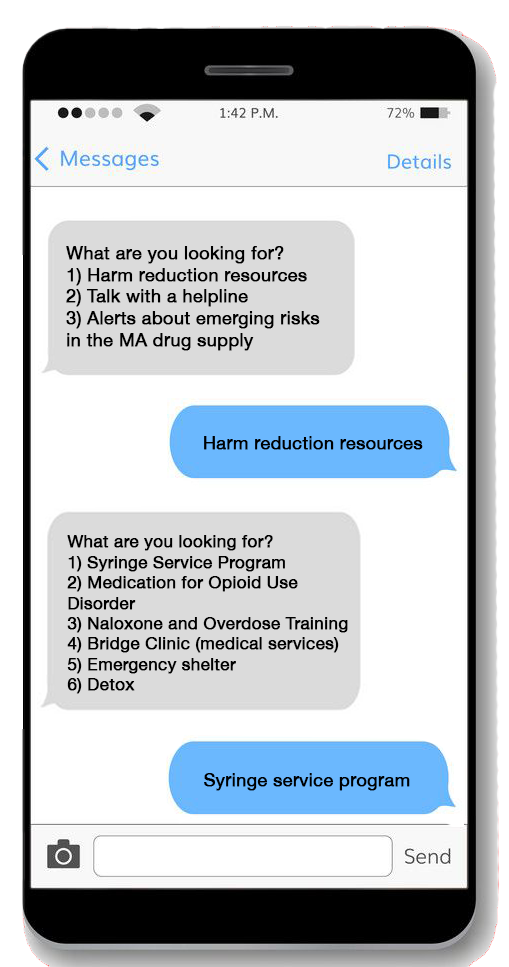
If people are unable to use digital technology then they can't access internet resources. Educating individuals about harm reduction services empowers them to make decisions that reduce their risk. Many great online resources exist, describing different harm reduction programs. But people who are unsheltered or poor may have limited data on their phones, hampering their ability to access the resources. Public WiFi has imperfect coverage. Additionally, some people struggle to navigate the internet and digital applications.
This SMS-based platform allows anyone to learn about harm reduction resources by texting a phone number. The simple interface makes it easy to find information about Syringe Services Programs, Naloxone and Overdose Training, Shelter, and more. App users can find address information and a phone number to contact. The TextBot is free and also connects people to helplines. This is NOT artificial intelligence like ChatGPT but instead designed like old AOL Instant Messenger bots.
The innovative approach autonomously distributes information without requiring staff time and is available 24/7. The bot only costs between $.0079 and $.02 per text it receives and sends, so most utilizations will cost less than a dollar. Efficient public health. The developer has self-funded the demo through this summer or until the budget runs out. If organizations want to implement the software, reach out.
The drug supply can undergo unexpected changes, putting people who use drugs at risk. For example, in Massachusetts the drug supply has seen changes like xylazine and new opioids. The application integrates an emergency alert system into the Harm Reduction TextBot to notify participants about emergent risks. Administrators sign in to their gated dashboard, sending out text blasts. This is a proof-of-concept and alerts will consist of any news that comes out from official or community drug checking sources in MA. Individuals sign up via SMS, proving out another use case: program registration.
The software developer is committed to furthering health equity. Harm Reduction TextBot collects race/ethnicity, gender, and age demographics to evaluate its reach and utilization. The collection proves another use case: administering surveys with clients over SMS. Additionally, the app tracks performance metrics like the number of users, sessions, and total texts exchanged. It also tracks interest in different types of resources.
Perceived stigma is a barrier to people seeking out services. The TextBot applies the SHA-2 and Fernet encryption to anonymize phone numbers it interacts with, so app users can feel comfortable. All activity on the app is anonymized. The SMS provider Twilio logs messages sent and received, but piecing together activity would take significant effort.